Microsoft Network Adapter Multiplexor Enable
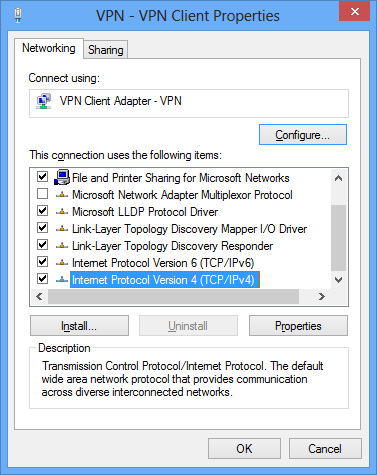
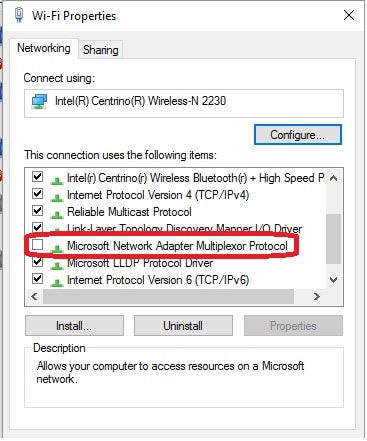
Apr 08, 2015 Create a Name for the Virtual Switch. Select External Network. Click on the Microsoft Network Adapter Multiplexor Driver. Verify that the “Enable virtual LAN identification for management operating system” is checked. Then Click Apply and OK. Network Adapter, or Local Area Network Adapter that we know as LAN. At starting releases of this NIC there are separate NIC that consisted of a card that is connected with the motherboard of the computer. And an Rj45 connector is used to connect it with other PC. How to Configure the Microsoft Network Adapter Multiplexor protocol?
-->Applies to: Windows Server (Semi-Annual Channel), Windows Server 2016
Jan 11, 2017 You can't use the windows driver for teaming because doesn't contain multiplexer protocol. Proposed as answer by Cartman Shen Microsoft contingent staff Wednesday, January 11, 2017 3:38 AM Friday, December 30, 2016 7:53 AM. Mar 05, 2020 Should I Enable the Microsoft Network Adapter Multiplexor Protocol? As I mentioned before, the Protocol only works when teaming or combining multiple Network Adapters. If you try to enable this option by selecting the option manually while the other items in the list are enabled, you will see this error.
In this topic, we provide you with instructions to deploy Converged NIC in a Teamed NIC configuration with Switch Embedded Teaming (SET).
The Multiplexor protocol is used for multiple network adapters, not multiple PFs within the same card. (PF=Physical function). I think what you want is 'NIC Teaming' and you can use the LBFO utility to configure when not in Hyper-V. Oct 14, 2018 For example, if there are two physical network adapters in a team, the Microsoft Network Adapter Multiplexor protocol will be disabled for these two physical network adapters and checked in the teamed adapter. This driver is used for two scenarios in teaming. Both of these scenarios require at least two connected network adapters on a single PC. I reinstalled windows server couple of times and each time the drivers are not being picked up. My motherboard is ASRock Z97 Extreme 4. I tried installing the drivers from manufacturers website and it wont let me install the network adapter driver. When I try to install intel LAN driver v20. It says no intel adpater found. Please share your wisdom.
The example configuration in this topic describes two Hyper-V hosts, Hyper-V Host 1 and Hyper-V Host 2. Both hosts have two network adapters. On each host, one adapter is connected to the 192.168.1.x/24 subnet, and one adapter is connected to the 192.168.2.x/24 subnet.
Step 1. Test the connectivity between source and destination
Ensure that the physical NIC can connect to the destination host. This test demonstrates connectivity by using Layer 3 (L3) - or the IP layer - as well as the Layer 2 (L2) virtual local area networks (VLAN).
View the first network adapter properties.
Results:
Name InterfaceDescription ifIndex Status MacAddress LinkSpeed Test-40G-1 Mellanox ConnectX-3 Pro Ethernet Adapter 11 Up E4-1D-2D-07-43-D0 40 Gbps View additional properties for the first adapter, including the IP address.
Results:
Parameter Value IPAddress 192.168.1.3 InterfaceIndex 11 InterfaceAlias Test-40G-1 AddressFamily IPv4 Type Unicast PrefixLength 24 View the second network adapter properties.
Results:
Name InterfaceDescription ifIndex Status MacAddress LinkSpeed TEST-40G-2 Mellanox ConnectX-3 Pro Ethernet A.#2 13 Up E4-1D-2D-07-40-70 40 Gbps View additional properties for the second adapter, including the IP address.
Results:
Parameter Value IPAddress 192.168.2.3 InterfaceIndex 13 InterfaceAlias TEST-40G-2 AddressFamily IPv4 Type Unicast PrefixLength 24 Verify that other NIC Team or SET member pNICs has a valid IP address.
Use a separate subnet, (xxx.xxx.2.xxx vs xxx.xxx.1.xxx), to facilitate sending from this adapter to the destination. Otherwise, if you locate both pNICs on the same subnet, the Windows TCP/IP stack load balances among the interfaces and simple validation becomes more complicated.
Step 2. Ensure that source and destination can communicate
In this step, we use the Test-NetConnection Windows PowerShell command, but if you can use the ping command if you prefer.
Verify bi-directional communication.
Results:
Parameter Value ComputerName 192.168.1.5 RemoteAddress 192.168.1.5 InterfaceAlias Test-40G-1 SourceAddress 192.168.1.3 PingSucceeded False PingReplyDetails (RTT) 0 ms In some cases, you might need to disable Windows Firewall with Advanced Security to successfully perform this test. If you disable the firewall, keep security in mind and ensure that your configuration meets your organization's security requirements.
Disable all firewall profiles.
After disabling the firewall profiles, test the connection again.
Results:
Parameter Value ComputerName 192.168.1.5 RemoteAddress 192.168.1.5 InterfaceAlias Test-40G-1 SourceAddress 192.168.1.3 PingSucceeded False PingReplyDetails (RTT) 0 ms Verify the connectivity for additional NICs. Repeat the previous steps for all subsequent pNICs included in the NIC or SET team.
Results:
Parameter Value ComputerName 192.168.2.5 RemoteAddress 192.168.2.5 InterfaceAlias Test-40G-2 SourceAddress 192.168.2.3 PingSucceeded False PingReplyDetails (RTT) 0 ms
Step 3. Configure the VLAN IDs for NICs installed in your Hyper-V hosts
Many network configurations make use of VLANs, and if you are planning to use VLANs in your network, you must repeat the previous test with VLANs configured.
For this step, the NICs are in ACCESS mode. However, when you create a Hyper-V Virtual Switch (vSwitch) later in this guide, the VLAN properties are applied at the vSwitch port level.
Because a switch can host multiple VLANs, it is necessary for the Top of Rack (ToR) physical switch to have the port that the host is connected to configured in Trunk mode.
Note
Consult your ToR switch documentation for instructions on how to configure Trunk mode on the switch.
The following image shows two Hyper-V hosts with two network adapters each that have VLAN 101 and VLAN 102 configured in network adapter properties.
Tip
According to the Institute of Electrical and Electronics Engineers (IEEE) networking standards, the Quality of Service (QoS) properties in the physical NIC act on the 802.1p header that is embedded within the 802.1Q (VLAN) header when you configure the VLAN ID.
Configure the VLAN ID on the first NIC, Test-40G-1.
Results:
Name DisplayName DisplayValue RegistryKeyword RegistryValue TEST-40G-1 VLAN ID 101 VlanID {101} Restart the network adapter to apply the VLAN ID.
Ensure the Status is Up.
Results:
Name InterfaceDescription ifIndex Status MacAddress LinkSpeed Test-40G-1 Mellanox ConnectX-3 Pro Ethernet Ada. 11 Up E4-1D-2D-07-43-D0 40 Gbps Configure the VLAN ID on the second NIC, Test-40G-2.
Results:
Name DisplayName DisplayValue RegistryKeyword RegistryValue TEST-40G-2 VLAN ID 102 VlanID {102} Restart the network adapter to apply the VLAN ID.
Ensure the Status is Up.
Results:
Name InterfaceDescription ifIndex Status MacAddress LinkSpeed Test-40G-2 Mellanox ConnectX-3 Pro Ethernet Ada. 11 Up E4-1D-2D-07-43-D1 40 Gbps Important
It might take several seconds for the device to restart and become available on the network.
Verify the connectivity for the first NIC, Test-40G-1.
If connectivity fails, inspect the switch VLAN configuration or destination participation in the same VLAN.
Results:
Parameter Value ComputerName 192.168.1.5 RemoteAddress 192.168.1.5 InterfaceAlias Test-40G-1 SourceAddress 192.168.1.5 PingSucceeded True PingReplyDetails (RTT) 0 ms Verify the connectivity for the first NIC, Test-40G-2.
If connectivity fails, inspect the switch VLAN configuration or destination participation in the same VLAN.
Results:
Parameter Value ComputerName 192.168.2.5 RemoteAddress 192.168.2.5 InterfaceAlias Test-40G-2 SourceAddress 192.168.2.3 PingSucceeded True PingReplyDetails (RTT) 0 ms Important
It's not uncommon for a Test-NetConnection or ping failure to occur immediately after you perform Restart-NetAdapter. So wait for the network adapter to fully initialize, and then try again.
If the VLAN 101 connections work, but the VLAN 102 connections don't, the problem might be that the switch needs to be configured to allow port traffic on the desired VLAN. You can check for this by temporarily setting the failing adapters to VLAN 101, and repeating the connectivity test.
E mu e6400 ultra manual. The following image shows your Hyper-V hosts after successfully configuring VLANs.
Step 4. Configure Quality of Service (QoS)
Note
You must perform all of the following DCB and QoS configuration steps on all hosts that are intended to communicate with each other.
Install Data Center Bridging (DCB) on each of your Hyper-V hosts.
- Optional for network configurations that use iWarp.
- Required for network configurations that use RoCE (any version) for RDMA services.
Results:
Success Restart Needed Exit Code Feature Result True No Success {Data Center Bridging} Set the QoS policies for SMB-Direct:
- Optional for network configurations that use iWarp.
- Required for network configurations that use RoCE (any version) for RDMA services.
In the example command below, the value “3” is arbitrary. You can use any value between 1 and 7 as long as you consistently use the same value throughout the configuration of QoS policies.
Results:
Parameter Value Name SMB Owner Group Policy (Machine) NetworkProfile All Precedence 127 JobObject NetDirectPort 445 PriorityValue 3 Set additional QoS policies for other traffic on the interface.
Rumors, leaks, announcements, fan art, and everything in between are allowed, as long as it's directly related to Fallout 4. A place for any and all discussion about Fallout 4. We currently have megathreads for:. Fallout 4 large address aware. See the rules below for more information.System requirements. Official and Un-Official can be foundFallout Network Discord serverThe invite link can be found.POSTING GUIDELINES.Before posting anything to the subreddit, check our to see if a megathread exists.
Results:
Parameter Value Name DEFAULT Owner Group Policy (Machine) NetworkProfile All Precedence 127 Template Default JobObject PriorityValue 0 Turn on Priority Flow Control for SMB traffic, which is not required for iWarp.
Results:
Priority Enabled PolicySet IfIndex IfAlias 0 False Global 1 False Global 2 False Global 3 True Global 4 False Global 5 False Global 6 False Global 7 False Global IMPORTANTIf your results do not match these results because items other than 3 have an Enabled value of True, you must disable FlowControl for these classes.
Under more complex configurations, the other traffic classes might require flow control, however these scenarios are outside the scope of this guide.
Enable QoS for the first NIC, Test-40G-1.
Capabilities:
Parameter Hardware Current MacSecBypass NotSupported NotSupported DcbxSupport None None NumTCs(Max/ETS/PFC) 8/8/8 8/8/8 OperationalTrafficClasses:
TC TSA Bandwidth Priorities 0 Strict 0-7 OperationalFlowControl:
Priority 3 Enabled
OperationalClassifications:
Protocol Port/Type Priority Default 0 NetDirect 445 3 Enable QoS for the second NIC, Test-40G-2.
Capabilities:
Parameter Hardware Current MacSecBypass NotSupported NotSupported DcbxSupport None None NumTCs(Max/ETS/PFC) 8/8/8 8/8/8 OperationalTrafficClasses:
TC TSA Bandwidth Priorities 0 Strict 0-7 OperationalFlowControl:
Priority 3 Enabled
OperationalClassifications:
Protocol Port/Type Priority Default 0 NetDirect 445 3 Reserve half the bandwidth to SMB Direct (RDMA)
Results:
Name Algorithm Bandwidth(%) Priority PolicySet IfIndex IfAlias SMB ETS 50 3 Global View the bandwidth reservation settings:
Results:
Name Algorithm Bandwidth(%) Priority PolicySet IfIndex IfAlias [Default] ETS 50 0-2,4-7 Global SMB ETS 50 3 Global (Optional) Create two additional traffic classes for tenant IP traffic.
Results:
Name Algorithm Bandwidth(%) Priority PolicySet IfIndex IfAlias IP1 ETS 10 1 Global Results:
Name Algorithm Bandwidth(%) Priority PolicySet IfIndex IfAlias IP2 ETS 10 2 Global View the QoS traffic classes.
Results:
Name Algorithm Bandwidth(%) Priority PolicySet IfIndex IfAlias [Default] ETS 30 0,4-7 Global SMB ETS 50 3 Global IP1 ETS 10 1 Global IP2 ETS 10 2 Global (Optional) Override the debugger.
By default, the attached debugger blocks NetQos.
Results:
Step 5. Verify the RDMA configuration (Mode 1)
You want to ensure that the fabric is configured correctly prior to creating a vSwitch and transitioning to RDMA (Mode 2).
The following image shows the current state of the Hyper-V hosts.
Verify the RDMA configuration.
Results:
Name InterfaceDescription Enabled TEST-40G-1 Mellanox ConnectX-4 VPI Adapter #2 True TEST-40G-2 Mellanox ConnectX-4 VPI Adapter True Determine the ifIndex value of your target adapters.
You use this value in subsequent steps when you run the script you download.
Results:
InterfaceAlias InterfaceIndex IPv4Address TEST-40G-1 14 {192.168.1.3} TEST-40G-2 13 {192.168.2.3} Download the DiskSpd.exe utility and extract it into C:TEST.
Download the Test-RDMA PowerShell script to a test folder on your local drive, for example, C:TEST.
Run the Test-Rdma.ps1 PowerShell script to pass the ifIndex value to the script, along with the IP address of the first remote adapter on the same VLAN.
In this example, the script passes the ifIndex value of 14 on the remote network adapter IP address 192.168.1.5.
Results:
Note
If the RDMA traffic fails, for the RoCE case specifically, consult your ToR Switch configuration for proper PFC/ETS settings that should match the Host settings. Refer to the QoS section in this document for reference values.
Run the Test-Rdma.ps1 PowerShell script to pass the ifIndex value to the script, along with the IP address of the second remote adapter on the same VLAN.
In this example, the script passes the ifIndex value of 13 on the remote network adapter IP address 192.168.2.5.
Results:
Step 6. Create a Hyper-V vSwitch on your Hyper-V hosts
The following image shows Hyper-V Host 1 with a vSwitch.
Create a vSwitch in SET mode on Hyper-V host 1.
Result:
Name SwitchType NetAdapterInterfaceDescription VMSTEST External Teamed-Interface View the physical adapter team in SET.
Results:
Display two views of the host vNIC
Results:
Name InterfaceDescription ifIndex Status MacAddress LinkSpeed vEthernet (VMSTEST) Hyper-V Virtual Ethernet Adapter #2 28 Up E4-1D-2D-07-40-71 80 Gbps View additional properties of the host vNIC.
Results:
Name IsManagementOs VMName SwitchName MacAddress Status IPAddresses VMSTEST True VMSTEST E41D2D074071 {Ok} Test the network connection to the remote VLAN 101 adapter.
Results:
Step 7. Remove the Access VLAN setting
In this step, you remove the ACCESS VLAN setting from the physical NIC and to set the VLANID using the vSwitch.
You must remove the ACCESS VLAN setting to prevent both auto-tagging the egress traffic with the incorrect VLAN ID and from filtering ingress traffic which doesn't match the ACCESS VLAN ID.
Remove the setting.
Set the VLAN ID.
Results:
Test the network connection.
Results:
IMPORTANT If your results are not similar to the example results and ping fails with the message 'WARNING: Ping to 192.168.1.5 failed -- Status: DestinationHostUnreachable,' confirm that the “vEthernet (VMSTEST)” has the proper IP address.
If the IP address is not set, correct the issue.
Rename the Management NIC.
Results:
Name IsManagementOs VMName SwitchName MacAddress Status IPAddresses CORP-External-Switch True CORP-External-Switch 001B785768AA {Ok} MGT True VMSTEST E41D2D074071 {Ok} View additional NIC properties.
Results:
Name InterfaceDescription ifIndex Status MacAddress LinkSpeed vEthernet (MGT) Hyper-V Virtual Ethernet Adapter #2 28 Up E4-1D-2D-07-40-71 80 Gbps
Step 8. Test Hyper-V vSwitch RDMA
The following image shows the current state of your Hyper-V hosts, including the vSwitch on Hyper-V Host 1.
Set the priority tagging on the Host vNIC to complement the previous VLAN settings.
Results:
Name : MGTIeeePriorityTag : On
Create two host vNICs for RDMA and connect them to the vSwitch VMSTEST.
View the Management NIC properties.
Results:
Name IsManagementOs VMName SwitchName MacAddress Status IPAddresses CORP-External-Switch True CORP-External-Switch 001B785768AA {Ok} Mgt True VMSTEST E41D2D074071 {Ok} SMB1 True VMSTEST 00155D30AA00 {Ok} SMB2 True VMSTEST 00155D30AA01 {Ok}
Step 9. Assign an IP address to the SMB Host vNICs vEthernet (SMB1) and vEthernet (SMB2)
The TEST-40G-1 and TEST-40G-2 physical adapters still have an ACCESS VLAN of 101 and 102 configured. Because of this, the adapters tag the traffic - and ping succeeds. Previously, you configured both pNIC VLAN IDs to zero, then set the VMSTEST vSwitch to VLAN 101. After that, you were still able to ping the remote VLAN 101 adapter by using the MGT vNIC, but there are currently no VLAN 102 members.
Remove the ACCESS VLAN setting from the physical NIC to prevent it from both auto-tagging the egress traffic with the incorrect VLAN ID and to prevent it from filtering ingress traffic that doesn't match the ACCESS VLAN ID.
Results:
Test the remote VLAN 102 adapter.
Results:
Add a new IP address for interface vEthernet (SMB2).
Results:
Test the connection again.
Place the RDMA Host vNICs on the pre-existing VLAN 102.
Results:
Inspect the mapping of SMB1 and SMB2 to the underlying physical NICs under the vSwitch SET Team.
The association of Host vNIC to Physical NICs is random and subject to rebalancing during creation and destruction. In this circumstance, you can use an indirect mechanism to check the current association. The MAC addresses of SMB1 and SMB2 are associated with the NIC Team member TEST-40G-2. This is not ideal because Test-40G-1 does not have an associated SMB Host vNIC, and will not allow for utilization of RDMA traffic over the link until an SMB Host vNIC is mapped to it.
Results:
View the VM network adapter properties.
Results:
View the network adapter team mapping.
The results should not return information because you have not yet performed mapping.
Map SMB1 and SMB2 to separate physical NIC team members, and to view the results of your actions.
Important
Ensure that you complete this step before proceeding, or your implementation fails.
Results:
Confirm the MAC associations created previously.
Results:
Test the connection from the remote system because both Host vNICs reside on the same subnet and have the same VLAN ID (102).
Results:
Results:
Set the name, switch name, and priority tags.
Results:
View the vEthernet network adapter properties.
Results:
Enable the vEthernet network adapters.
Results:
Step 10. Validate the RDMA functionality
You want to validate the RDMA functionality from the remote system to the local system, which has a vSwitch, to both members of the vSwitch SET team.
Because both Host vNICs (SMB1 and SMB2) are assigned to VLAN 102, you can select the VLAN 102 adapter on the remote system.
In this example, the NIC Test-40G-2 does RDMA to SMB1 (192.168.2.111) and SMB2 (192.168.2.222).
Please click on each missing device in the device manager. Pci simple communication controller driver hp. Please someone help me with the correct drivers to install.
Can' T Enable Microsoft Network Adapter Multiplexor Protocol Windows 10
Tip
Can' T Enable Microsoft Network Adapter Multiplexor Protocol Software
You might need to disable the Firewall on this system. Consult your fabric policy for details.
Results:
View the network adapter properties.
Results:
View the network adapter RDMA information.
Results:
Perform the RDMA traffic test on the first physical adapter.
Results:
Perform the RDMA traffic test on the second physical adapter.
Results:
Test for RDMA traffic from the local to the remote computer.
Results:
Perform the RDMA traffic test on the first virtual adapter.
Results:
Perform the RDMA traffic test on the second virtual adapter.
Results:
Can' T Enable Microsoft Network Adapter Multiplexor Protocol For Mac
The final line in this output, 'RDMA traffic test SUCCESSFUL: RDMA traffic was sent to 192.168.2.5,' shows that you have successfully configured Converged NIC on your adapter.
Related topics
If you are not seeing your network adapter on your computer, one of the reasons for this may be because you have an older network card driver installed on your computer. But, you don’t have to worry, fixes are available to solve this problem. If the problem is happening on your computer for the first time, try rebooting your computer and check if you can discover the network adapter on your computer.
NOTE-
If you have an Ethernet cable plugged into your system, then you should unplug the Ethernet cable from your computer and then plug in the Ethernet cable again. Check if you can find the adapter on your computer.
If the network driver is still not appearing on your computer, go for the fixes.
Fix 1- Perform cleanup of network devices-
Performing a clean up of the network devices will work out for you.
1. Pressing ‘Windows key‘ and the ‘R‘ key will open the Run window.
2. In the Run window, type “cmd” and then press ‘Ctrl+Shift+Enter‘ keys together to open the Command Prompt in administrative mode.
2. In the Command Prompt window, type or copy–paste this command and then press the Enter key.
Close Command Prompt window.
[NOTE–
In case if you face any error when you are trying to execute the command, try executing the command again on your computer.
Restart your computer to let the changes take effect on your computer. Your problem should be solved.
Fix 2 – Reset Winsock from cmd
If any of the above fixes didn’t work out for you, resetting the winsock may help you out.
1. Open the Command Prompt with administrative rights.
2. In the Command Prompt window, type or copy–paste this command in Command Prompt window and hit Enter.
Close Command Prompt window on your computer.
Reboot your computer to save the changes. After rebooting check if you can discover the missing network adapter again on your computer.
Fix 3 – Show hidden devices in Device Manager
Sometimes the network adapter gets hidden in the Device Manager window and then this problem prevails. To check, follow these steps-
1. To open a Run window, just press ‘Windows key+R‘.
2. After you have opened the Run window, you have to type “devmgmt.msc“.
2. In the Device Manager window, click on “View” on the menu bar and then make sure “Show hidden devices” is checked.
3. After doing that, click on “Network adapters” from the list of devices.
4. Then, click on “Action” in the menu bar and then finally click on “Scan for hardware changes“.
5. In Device Manager window, expand “Network adapters” sections and then check if the missing network adapter is appearing on your computer or not.
If this didn’t help you out, go for the next solution.
Fix 4 – Automate WWAN AutoConfig
Automating the WWAN AutoConfig service on your computer will surely help you out.
1. You will need to press Windows key+S and begin to type “Services“.
2. Then, click on the “Services” in the search result.
3. In the Services window, scroll down to find the “WWAN AutoConfig” service.
4. Now, double click on it, and WWAN AutoConfig Properties window will be opened.
5. In WWAN AutoConfig Properties window, check the ‘Service status‘, if it is “Running“. In case, if it is ‘Stopped‘, simply click on “Start” to start the service.
6. Then, click on the drop-down menu beside the option”Startup type:” and select “Automatic“.
5. Finally, click on “Apply” and then on “OK” to save the changes on your computer.
Close Services window.
Reboot your computer.
After rebooting your computer check if you can discover the missing adapter on your computer.
Fix-5 Update the network adapter driver
If you can not discover a network adapter driver on your computer, it is maybe because the old/incompatible version of the network adapter is installed. Updating your existing driver may solve the problem. Follow these steps to update your network adapter driver-
1. At first, press the Windows key and then start to type “devmgmt“.
2. Then, click on the “Device Manager” which appears in the elevated search result.
3. In the Device Manager window, find “Network Adapters” from the list, click on it to expand it.
4. Now, from the drop-down select the driver which you are using. Right-click on it and click on “Update driver”.

5. When you see this prompt has appeared “How do you want to search for the drivers?“.
6. At first, you have click on the option “Search automatically for updated driver software“.
Wait till Windows searches for the compatible driver for your network adapter, downloads it and installs it. Close the Device Manager window.
Then, reboot your computer.
Check if you can find the network adapter driver. If the problems still persist then go for the next fix.
Fix-6 Rollback network adapter driver update
If the network adapter was working well some days before then, recent updates to your driver may be the reason you are not seeing the network adapter on your computer. Rolling back the last update of your network adapter driver can solve the problem you are facing.
Follow these steps to rollback the faulty update of your network adapter driver–
1. At first, right-click on the Windows icon on the left-most corner of your screen, and then click on “Device Manager“.
The Device Manager utility will open.
2. In the Device Manager window, find “Network Adapters” from the list, click on it to expand it.
3. Now, from the drop-down double click on the driver which you are currently using.
The propertieswindow will open.
4. In the Properties window, go to the “Driver” tab.
5. Click on “Roll Back Driver“. Click on “OK“.
The driver will be rollbacked.
6. Close the Device Manager window.
Restart your computer.
After rebooting your computer check if any network adapter is visible on your computer. If you are still having the same problem go for the next fix.
Fix-7 Uninstall and Reinstalling Network adapter
Uninstalling and reinstalling the network adapter can clear any corrupt or bad files of the network driver from your computer. Now, in the first step the uninstallation of the network adapter will be done, and in the next step we will install the network adapter.
Follow these steps to uninstall your network adapter driver-
1. Open the Device Manager window.
2. In the Device Manager utility window, expand the “Network Adapter” section.
3. Right-click on the network adapter you are using, click on “Uninstall device“. This will uninstall the driver.
Now, we will reinstall the wifi driver again on your device.
Method 1–
Simply restarting your computer should reinstall the software again.
Method 2–
If rebooting your computer didn’t install the driver then you have to install the driver yourself. Follow to install the driver manually-
1. Open the Device Manager window.
2. At first, In the Device Manager window, click on “Action“.
3. Then, you need to click on “Scan for hardware changes“.
The uninstalled driver should be reinstalled again.
Method 3-
If Method 2 did not install the driver then follow this next steps –
1. Click on “View” of the Device Manager. Then click on “Show hidden device“.
2. This will show the hidden drivers. Look out for your network adapter.
That network driver that you have uninstalled should bear a yellow triangle with the driver’s name.
3. Right-click on the network adapter driver and click on the “Update driver software“.
Microsoft Network Adapter Multiplexor Enable Windows 7
3. Simply, choose the option “Search automatically for updated driver software“.
You will need to wait patiently as Windows will install the compatible driver.
You will need to close the Device Manager window.
Restart your computer to save the changes.
After rebooting, check if you can find the network adapter on your computer.
Fix- 8 Run System Restore on your computer
Running a system restore from a system restore point can solve your problem.
1. Press Windows Key+R together. The Run window shall prevail.
2. In the Run window, type “sysdm.cpl” and click on “OK“.
2. Go to the “System Protection” tab.
3. After click on “System Restore“. Then click on “Choose a different restore point“.
4. Then, you have to click on “Next“.
Microsoft Network Adapter Multiplexor Enabled
5. Choose the latest restore point
6. Then, click on the “Next“.
7. Finally, click on “Finish” to finish the process.
After the restoring process completes, check if you can find your network adapter.
If you still can’t find the network adapter then go for the next fix.
Fix-9 Troubleshoot network problems
You can troubleshoot your problem with Windows troubleshooter. The troubleshooter will not only detect the problem of your network adapter will also attempt fixes for those problems. Follow these steps to troubleshoot your network adapter driver problem-
1. Type “troubleshoot network” in the search box beside the Windows icon and click on “Troubleshoot network“.
2. Now, click on “Network troubleshooter“.
3. Now, follow on-screen instructions and it will automatically attempt fixes to your problem. When the process is complete click on “Close“.
Reboot your computer and check if you can find your network adapter driver on your computer. Your problem should be solved.
Sambit is a Mechanical Engineer By qualification who loves to write about Windows 10 and solutions to weirdest possible problems.