Clover Configurator Mac Clover Configurator For Mac
Jul 28, 2018 Here’s detailed steps on how to install macOS Mojave on a hackintosh using the Clover EFI Bootloader method. APFS Conversion in Mojave With the release of Mojave 10.14 and even High Sierra 10.13.6 and Apple has become more aggressive in pushing people to use their new file system introduced in High Sierra called Apple File System (APFS). If you run the Mojave installer from High Sierra the. Feb 01, 2020 I also have the clover configurator 5.9.3.0 and there is so much to setup, I'm lost. The videos go so fast and don't cover everything. Where can I find instructions. This isn't a hackintosh, its a real Mac. Can it be setup so I don't have to hold the option key during boot up and it goes straight to the clover menu?
- Clover Bootloader
- Clover Configurator Mac Download
- How To Use Clover Configurator
- Clover Configurator Tools
- Clover Configurator Mac Clover Configurator For Mac Os
- Clover Configurator For Windows 10
Status - 17 July 2020 - Core information collected [Optionally: I may at some point add section on moving to / from: Physical to Virtual Mac and to / from VMWare Fusion to QEMU / KVM Macs] and now verified with Ubuntu 20.04 and does some further Q35 Version and Network device testing.
If you do Mac development then its likely you will run virtual Mac's. In fact runing virtual machines for development is pretty much essential for anything that is non-trival. For Mac developer, this meant a choice of VMWare or Parallels and now you can also use Linux with KVM / QEMU and Clover/OVMF.
Here are the high level steps and instructions required to get macOS (OS X) up and running on Ubuntu with KVM / QEMU.
- Get Ubuntu running with virtualisation enabled
- Install KVM / QEMU software
- Configure Ubuntu network bridge with NetPlan
- Add Clover for EFI boot support
- Create your Mac VM using the right QEMU configuration and settings for macOS
- Optionally add PCI Pass-Through for network and GPU support on you virtualised macOS machine
I will cover each area of configuration in turn.
I started experimenting with macOS on KVM with Ubuntu 16.04. At the time this required recompiling of QEMU. I then moved to Ubuntu 18.04 (which does not require any compilation) and updated to 19.04 (which has much much better performance) and have tested with 19.10. I am now running 20.04 LTS and have found it completely stable for running virtual macOS on KVM.
Here is summary of various Ubuntu Versions (desktop):
- Ubuntu 16.04 - Requires compile of upstream QEMU (avoid)
- Ubuntu 18.04 - Works out of box, but introduces NetPlan, so you need to learn how to configure your bridge (linux virtual switch) to get your networking working, also it is very very slow to boot macOS
- Ubuntu 19.04 - As per 18.04 and boots macOS much much faster
- Ubuntu 19.10 - having done testing, I am now using 19.10 as main virtualisation host
- Ubuntu 20.04 - have tested and have running number of macOS vm's as part of upgrade process from 19.10
If you want to use PCI Pass-through the you should update your grub boot configuration, here are KVM Kernal Configuration parameters that are relevant:
NOTE: The 'iommu=1 intel_iommu=on' grub settings are required to enable PCI Pass-Through
Reboot the machine to ensure all kernal parameter are set
The packages required for Ubuntu are: qemu, libvirt, virtual machine manager, OVMF:
This installs:
- 64 bit x86 emulation and the libvirt abstraction layer,
- the open virtual machine firmware (ovmf) - First level of EFI support (you need Clover as well)
- virt-manager - virtual machine configuration and management UI
All networking (unless you attach a physical NIC via PCI Passthrough) with KVM / QEMU is handled via Linux Bridge. The Linux Bridge is a kernal loaded modue that behaves like a dumb ethernet switch. It does not provide any active network function in macOS context and the only important thing you have to decide is a name for the logical bridge (i.e. br20) and the physical NIC that this will be connected to. In Ubuntu 18.04, 19.04, 19.10 & 20.04 this is managed via the NetPlan configuration.
Here is a example NetPlan configuration for a machine with multiple ethernet NICs installed. You will see that all the network ethernet interfaces bar ens4f0 are IP disabled, Instead all the interfaces have bridges defined: br01, br20, br40 & br50. All the bridges have DHCP4 disabled. If you enable DHCP4 or define a static IP address on a bridge then this IP address will be assigned to the KVM Hosting machines and allow the virtual machines connected to the network bridge to get access to the hosting machine. This is likely to be undesireable for security reasons. It illustrates how virtualisation has signficant impact on how physical network seperation has to be managed. In this example the 192.168.10.4/24 address is used to access the KVM hosting machine.
In my case the logical NICs that the ethernet ports connect to have corresponding seperate ethernet VLAN amd IP subnets. You need to keep in mind what subnet you want your macOS virtual machine to connect to and the bridge this is supported by. The selection of which bridge a NIC is connected to is managed via QEMU configuration.
While ovmf provides the first level of EFI boot for virtual Mac, it does not provide everything you need. The EFI boot process passes control to Clover EFI boot manager which provides support to load the HFS+ and new Apple File System (APFS) file system drivers needed to boot macOS (OS X).
Clover also provides things that make KVM / QEMU look like a real Mac to the macOS software layer.
To use Clover you need to create a small seperate qemu qcow2 virtual disk. This contains the various Clover drivers and their configuration data. The Clover virtual disk becames the boot disk which then loads macOS from the HFS+/APFS virtual disk.
Setting up Clover boot disk is a bit of a chicken / egg problem, as the Clover intaller is a macOS app and the disk you want to do the install on is a virtual disk, but you need to have a bootable Mac to do this..
The way to start is to create the Clover disk via VMWare Fusion macOS virtual machine, which has Clover disk attached as virtual image and then once you have installed Clover onto this then convert the vmdk format disk image to native QEMU qcow2 one. Having Clover on a little disk makes it much easer to work with, than using a CD-ROM boot image. The Clover boot disk is a MS FAT32 formated disk, which is setup based on EFI conventions.
Here is summary information on layout of Clover disk:
Stencyl games. The sizes correspond to: 512 MiB GPT Partitioned Disk with
- 200 MiB MS FAT32 - EFI volume
- 310 MiB MS FAT32 - CLOVER volume
Only the the EFI part is required, but having the extra CLOVER volumes is useful as you can put drivers and other things like 'Clover Configurator' here as it may be that you cannot get access to network on initial boot.
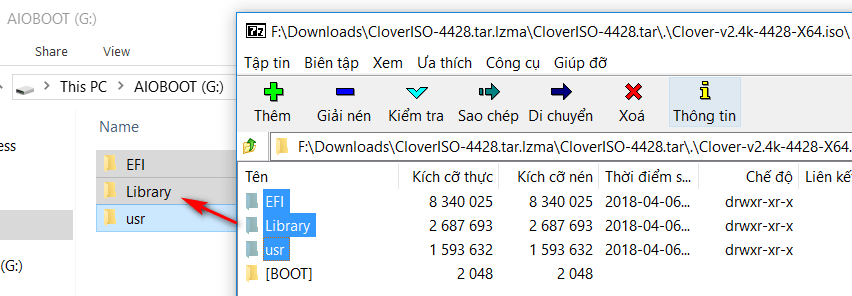
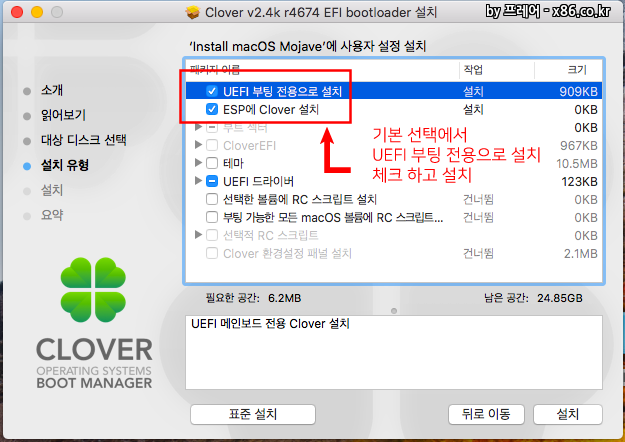
To install clover on the disk you simply download Clover installer, run the installer and select the '/Volumes/EFI' (the mount point that partition will be on after rebooting with Clover disk attached) as the installation location. The installer will populate the Clover directory structure and add the files
Clover configuration example (without SMBIOS details):
On KVM the setup is very sensitive to the SMBIOS configuration and this is quite complex. The recommended approach is to use 'Glover Configurator' to create this. Here is a seperate SMBIOS Clover configuration example:
I have found the MacMini6,2 machine type to be reliable and have left my machine type as this for more than 1 year as testing with other machines types resulted in failure to boot.
You can test with Clover Configurator for more recent machines by loading and saving the configuration and then copying into backup a file on the EFI volume. This means you can readily return to a known configuration, by booting using Ubuntu and mounting the EFI volume. When editing the configuration, the important things is to ensure machine uuid and serial numbers are unique to the machine instance.
The Clover Configuration is with the EFI directory: /Volumes/EFI/EFI/CLOVER/config.plist
In addition to setting the Clover configuration, you also need to select a subset of EFI drivers to load on boot.
With Clover V2.5 Rel 5070 here is the set of drivers I have installed (from macOS terminal, on EFI boot disk mounted at /Volumes/EFI):
To know what Clover system has been used to boot from by convention I also do: touch clover-vX.X_rxxxx and touch i-am-MAC-OS in the /Volume/EFI/EFI/CLOVER directory so it is easy to see the Clover version and virtual Mac that is being used. This is very helpful if you have multiple Clover disks attached to the machine when copying configuration across old / new Clover configurations.
With the exception of: HFSPlus.efi and apfs.efi files all the files within the driver directory are part of Clover, the two exception are taken from an actual Mac. These are the HPFS+ (from physical firmware) and APFS (from disk) drivers which are required to read the Apple formatted disk volumes.
The VBoxHfs.efi is a Clover supplied alternate to Apple HFSPlus.efi driver.
When you install Clover you can select to have all the drivers available installed in the /Volumes/EFI/EFI/Clover/drivers/off directory and then selectively move the ones you need into the UEFI directory.
NOTE 1: With KVM based Macs there is no need to get into the black magic of extra kexts (kernel extensions) or ACPI / DSDT (Advance Configuration & Power Interface / Differentiated System Description Table) tweeking.
NOTE 2: The lastest version of Clover are 64-Bit UEFI, in prior version there where as set of 32-Bit and 64-Bit EFI files. In my Clover:
- V2.4 Rel. 44509 - the EFI driver files are in /Volumes/EFI/EFI/CLOVER/drivers64UEFI while
- V2.5 Rel. 5070 - the EFI driver files are in /Volumes/EFI/EFI/CLOVER/drivers
So it appears that the need to specify 64-Bit version has gone.
To covert VMWare EFI Boot disk to QEMU qcow2 one:
To run macOS machine with QEMU / KVM requires very specific set up, summarised here:
- Q35 - Virtual Machine (v 2.11, 2.12 work) [Also I have tested with v 3.1 post installation boot up , but not with a new install]
- OVMF - Firmware which has associated NVRAM storage blob (OVMF_VARS.fd). Each bootable macOS machines needs to have its own NVRAM storage device
- e1000-82545em - network device, connected to bridge br10 in below example [or vmxnet3 (VMWare virtual NIC driver) testing within 10.12 Sierra onwards]
- SATA - Disk and CDROM only, in this example there are 2 disks attached, the Clover Boot disk and the virtual MacOS one
- USB Keyboard
- EvTouch USB Graphics Tablet
- VGA Graphics
In addition the Mac VM is very sensitive to CPU type and features, for Catalina here are details of CPU configuration:
The macOS machine also needs to get its special applesmc configuration:
NOTE: See 'Mac OS X Internals - A Systems Approach' Bonus chapter to get above programmically on your Mac. How to turn on red line spell check in word for mac os.
My approach is to use the Virtual Machine Manager to create initial configuration, then start machine to save the configuration and then edit the configuration to set the detailed CPU, Video & OVMF_VARS.fd configuration:
- sudo virsh edit MAC-NAME - to edit final configuration details.
As part of initial boot do an escape at Clover startup and change the Clover resolution value to match the config-plist value (in this example: 1024x768)
Here is example of complete configuration for (Catalina Mac):
Once you have completed editing using virsh, exit the editor and restart machine with all the correct configuration.
Once you have got a running macOS running, then for each new machine just copy the working Clover Boot disk and OVMF_VARS.fd files into new location for this new machine and then on initial bood go into Clover Configurator to edit the configuraton (serial numbers and UUID) so that it has its own unique identify.
If you you have configured you kernel correctly (see above grub configuration), then this is trivial. Simple grab the PCI Resource via Virtual Machine Manager GUI and reboot the machine.
I have successfully attached: SmallTree 10Gbe and Areca RAID controllers to QEMU / KVM Virtual Mac.
It is relatively easy to move physical Mac to Virtual and back again. The tools for this include:
- qemu-img - to convert images
- Carbon Copy Cloner - to copy bootable images
- OS Bless Command - to re-bless a HD volume to make it bootable
References & Links
After much effort and testing based on the following information from: Kraxel's, Kholia, Gordon Turner and Clover sites:
Kraxel - did a lot of ground work to get MacOS running on KVM, most of which has flowed into upstream KVM / QEMU and so this is historical now
Kholia - keeps onging testing and configuration tweeking information as MacOS goes through its release cycles
Gordon Turner - has some useful pointers that where easier to follow than some of Kholia's instructions
Clover - provides the MacOS EFI implementation tweeks required to bt MacOS running on KVM
Clover Configurator - only availeable as a binary executable, so you have to make a trust decision on whether to use it
My earlier notes on Insanely Mac
Mac OS X Internals - A Systems Approach by Amit Singh provides most of what you need to know about EFI and OS X (now macOS) boot process and has bonus chapter on SMC keys needed to boot OS X
Clover Configurator 5.4.5.0 Description:
Clover Configurator designed to help you create custom configuration files for the Clover EFI bootloader via a streamlined graphical interface.
Designed to help you customize the behavior of the Clover EFI Upon launch, Clover Configurator will check to see if there are already available configuration files, and enables you to view their content.
In addition, Clover Configurator can check for the latest Clover EFI revision, and helps you download and install the bootloader. The Clover Configurator app is organized around two major functionalities: you can use the available tools to perform certain tasks, or you can customize certain parameters associated with the Clover EFI configuration file.
Upon launch, Clover Configurator will check to see if there are already available configuration files, and enables you to view their content. In addition, Clover Configurator can check for the latest Clover EFI revision, and helps you download and install the bootloader.
The Clover Configurator app is organized around two major functionalities: you can use the available tools to perform certain tasks, or you can customize certain parameters associated with the Clover EFI configuration file.
Effortlessly modify the parameters of your Clover EFI configuration file
This utility keeps the Clover EFI parameters organized into various sections: you can start by modifying the ACPI parameters, you can personalize the boot mode, adjust the CPU performance, disable certain drivers, and so on.The utility also streamlines certain tasks: you can mount the EFI drive, you can view and save the boot.log file, you can preview and change the Clover theme, or you can install 32bit, 64bit, or 64bit UEFI drivers.
When you are satisfied with your settings, navigate to the built in generator to create a config file that will provide an almost complete configuration file for your Clover EFI bootloader.
Create your own Clover EFI config files via a streamlined and well organized graphical user interface
Thanks to its intuitive design, finding your way around the Clover Configurator application is quite easy: simply navigate to the available sections and adjust specific parameters.As a result, Clover Configurator is a great tool to have around if you want to have a better control over your Clover EFI bootloader, without having to deal with complex commands and workflows.
What's New in Clover Configurator
Version 5.4.5.0: Updated to latest platformdata in SMBIOS sectionUpdated CoffeeLake framebuffer data in Graphics section
Clover Configurator 5.4.2.0 includes 13 languages to be translated
Chinese (Simplified, traditional) – target-language= “zh-Hans”, “zh-Hant”Dutch – target-language= “nl”
French – target-language= “fr”
German – target-language= “de”
Italian – target-language= “it”
 Japanese – target-language= “ja”
Korean – target-language= “ko”
Polish – target-language= “pl”
Portuguese (Brazil) – target-language= “pt-BR”
Russian – target-language= “ru”
Spanish (Spanish, Latin America) – target-language= “es”, “es-419”/p>
How To Use (Video Tutorial)
Learn Clover Configurator UEFI ACPI Detailed
Learn Clover Configurator CPU Devices Drivers Detailed
Learn Clover Configurator Graphics Nvidia Intel AMD Detailed
Clover Configurator Changelog
Clover Configurator 5.4.4.0End of support for 10.8 (Mountain Lion)
Added possibility to change language from preferences
Updated Chinese and Korean languages
Improvements and fixes
Clover Configurator 5.4.3.1
Fixed some typos in Chinese and Russian languages
Clover Configurator 5.4.3.0
Added “cn” to Language key in Gui section
Updated Korean and Russian languages
Added Chinese (Simplified) and German language
Clover Configurator 5.4.2.1
Fixed copy/paste functions
Clover Configurator 5.4.2.0
Updated platformdata in SMBIOS section (includes new iMac 19,1 and 19,2 SMBIOS)
Added Russian and Korean language
Updated Kexts Installer, now you can select a different build of NoVPAJpeg according to your Lilu version
Improvements (right click for more information about your working file, added detailed explanation to each key)
Clover Configurator 5.4.1.0
Updated Boot -> Arguments section
Fixes and improvements
Clover Configurator 5.4.0.0
Update SMBIOS Platformdata (Clover Rev. 4864+)
Added AudioDxe driver in Install Drivers tool and Disable Drivers section (Clover Rev. 4843+)
Added PlayAsync key in GUI section (Clover Rev. 4840+)
Added Timezone key and updated EmbeddedThemeType key in GUI section (Clover Rev. 4773+)
Added new patches in Acpi and Kernel and Kext Patches sections (now, if there’s working Internet connection, will be automatically updated)
Added support for SVG themes in NVRAM tool
Updated Install Drivers tool
Updated Kexts Installer tool
Added new Clover Cloner tool
Fixes and improvements
Clover Configurator 5.3.2.0
Updated platformdata in SMBIOS section Improvements and fixes
Clover Configurator 5.3.1.0
Updated platformdata in SMBIOS section (includes new MacMini and MacBookAir 2018)
Updated Install/Update Clover and Kexts Installer tools
Clover Configurator 5.3.0.0
Updated IntelMaxValue key in Devices section [IntelBacklight for coffeelake – Now accept HEX value] (Clover Rev 4722+)
Updated platformdata in SMBIOS section (Clover Rev 4721+)
Added KbdPrevLang key in Gui section (Clover Rev 4719+)
Added EfiVersion key in SMBIOS section (Clover Rev 4711+)
Updated Disable Drivers section
Clover Configurator 5.2.1.0
Updated Install Drivers and Kext Installer tools
Improvements and fixes
Clover Configurator 5.2.0.0
Added new Kexts Installer tool
Added EmbeddedThemeType key in Gui section (Clover Rev 4644+)
Improved SMBIOS section
Updated platformdata in SMBIOS section
Added missing NameEH00 key in Devices > USB section (thanks to Sherlocks)
Improved MountEFI tool
Updated Sparkle framework to latest version
Clover Configurator 5.1.5.0
Updated ig-platform-id in Graphics section
Improvements and fixes
Clover Configurator 5.1.4.0
Updated platformdata in SMBIOS section
Updated ig-platform-id in Graphics section Fixes.
Clover Configurator 5.1.3.0
Updated platformdata in SMBIOS section
Fixed Mount EFI for 10.13.6 and 10.14 osx versions
Clover Configurator 5.1.1.0
Correct mistakes (Clover Rev 4497) InjectLAN->LANInjection and InjectHDMI->HDMIInjection keys in Devices section (Clover Rev 4507+)
Clover Configurator 5.1.0.0
Added InjectLAN and InjectHDMI keys in Devices section (Clover Rev 4497+)
Clover Configurator 5.0.1.0
Added an option to disable Gui transparency
Added an option to disable fade animation
Clover Configurator 5.0.0.0
Released Clover Configurator Global Edition
Added RenameDevices key in Acpi section – New Acpi patching feature (Clover Rev 4468+)
Added new way to make Properties in Devices section (Clover Rev 4466+)
 Added FixMCFG key in Acpi section (Clover Rev 4460+)
 Clover Configurator 4.60.2.0
Update Install Drivers section
Update Hex converter tool
Added Preferences panel
Fixes and Improvements
Clover Configurator 4.60.1.0
Update platformdata in SMBIOS section
Added decimal converter in Hex converter tool
Clover Configurator 4.56.0.0
Added RadeonDeInit key in Graphics section (Clover Rev 4296+)
Added repair mode if plist isn’t in the correct format
Fixed APFS container in Mount EFI->Partition scheme
Clover Configurator 4.55.0.0
Clover Bootloader
Added NoDynamicExtract key in Acpi->SSDT section (Clover Rev 4289+)
Renamed Fixes keys in according to Clover Rev 4282+ in Acpi->DSDT->Fixes section
Added FixMutex key in Acpi->DSDT->Fixes section (Clover Rev 4280+)
Added AutoMerge key in Acpi section (Clover Rev 4279+)
Added NoOemTableId key in Acpi->SSDT section (Clover Rev 4277+)
Added APSN, APLF, PluginType keys in Acpi->SSDT section (Clover Rev 4275+)
Added DisableAPSNAPLF key and removed oldway dropMCFG key in Acpi section (Clover Rev 4273+)
Added SignatureFixup in Boot section (Clover Rev 4270+)
Clover Configurator 4.54.0.0
Added KernelXCPM key in Kernel And Kext Patches section (Clover Rev 4250+)
Clover Configurator Mac Download
Added DropMCFG key in Acpi sectionAdded SavingMode in Cpu section
Clover Configurator 4.53.0.0
Added HibernationFixup key in Boot section (Clover Rev 4223+)
Clover Configurator 4.50.0
Added Autosave File option to Main menu application [Enabled by default]
How To Use Clover Configurator
Update and fixed platformdata in SMBIOS section
Clover Configurator 4.49.0
Clover Configurator – Changelog – What’s New in Version 4.49.0.0 (August 21st, 2017)
Added new boot-args “-disablegfxfirmware” in boot section
Improvements in Arguments->Custom Flags (user input restriction like white space)
Update platformdata in SMBIOS section Optimizations
Clover Configurator 4.48.0
Clover Configurator – Changelog – What’s New in Version 4.48.0 (August 16th, 2017)
Update platformdata in SMBIOS section
Added FixHeaders_20000000 key in Acpi section
Added new FakeCPUIDs in Kernel And Kext Patches section
Improvements in RtVariables section
Clover Configurator 4.47.0
Replaced Haswell-E key to KernelIvyXCPM in Kernel And Kext Patches section (Clover Rev 4154+)
Added AppleIntelCPUPM key in Kernel And Kext Patches section (Clover Rev 4152+)
Reworked SMBIOS section, added support for Board Serial Number (13 – 17 pattern), added new SMBIOS
Reworked RtVariables section
Clover Configurator 4.46.0
Added AirportBridgeDeviceName key in Devices section (Clover Rev 4117+)
Added FirmwareFeaturesMask key in SMBIOS section
Added text to Hex Converter in HEX Converter tool
Clover Configurator 4.45.0
Added NvidiaNoEFI key in Graphics section (Clover Rev 4111+)
Added new FakeCPUIDs in Kernel And Kext Patches section
Added new platformids in Graphics section
Clover Configurator 4.42.0
Updated EDID injection (Clover Rev 4053+)
Added Text Mode in TOOLS
Added Add-ons to Main menu application (CloverThemeManager shortcut. Only if Theme Manager is present)
Added IONVMeFamily patches (El Capitan, Sierra) in Kernel and Kext Patches->KextsToPatch
Added some ig-platform-id in Graphics section
Changed scan method for config files
Fixed base64 to hex converter in Mountain Lion
Fixed mountefi partitions in Mountain Lion
Improvements and bug fixes
Clover Configurator 4.41.0
Added BootPatches in Kernel and Kext Patches (Clover Rev 4020+)
Optimizations (Enabled multiple drag and drop reordering in KextsToPatch -> Kernel and Kext Patches section)
Clover Configurator 4.40.2
Reordered Fixes elements in Acpi section
Solved critical issue in Kernel and Kext Patches section (thnx to Sherlocks)
Bug fixes (thnx to Gengik84 and JLamp)
Optimizations (now works with unknown keys/values)
Clover Configurator 4.40.0
Disabled New_Way. Now NewWay always (Clover Rev 4006+)
Fixed some mistake in Kernel and Kext Patches and SMBIOS sections (thnx to Sherlocks)
Clover Configurator 4.38.0
Added HWPValue in Cpu section (Clover Rev 3976+)
Added list of patches in Acpi->DSDT->Patches and Kernel and Kext Patches->KextToPatch section
Added UUID generator and get UUID from system in System Parameters->Custom UUID section
 Added get UUID volume disk in GUI->Custom Entries->Volume section
 Clover Configurator 4.37.0
Added NVRAM section in TOOLS
Added base64 to HEX converter in TOOLS
Themes downloader was replaced by Themes Editor
Added new SMBIOS for MacBook Pro (Late 2016)
Clover Configurator 4.35.0
Added HPWEnable key in Cpu section (Clover Rev 3879+)
Added StrictHibernate in Boot section (Clover Rev 3895+)
Clover Configurator Tools
Added DisableASPM key in ACPI section (Clover Rev 3904+)Added NeverDoRecovery key in Boot section (Clover Rev 3908+)
Clover Configurator 4.34.0
Added SkipHibernateTimeout key in Boot section (Clover Rev 3850+)
Added DisableCloverHotkeys key in Boot section (Clover Rev 3870+)
Added new feature “Backup file before saving”
Clover Configurator 4.33.0
Added NvidiaWeb key in SystemParameters section (Clover Rev 3733+)
Added new EDID customization in Graphics section (Clover Rev 3737+)
Added some boot-args in Boot section
Clover Configurator Mac Clover Configurator For Mac Os
Fixed black table cell in Sierra OS X
Clover Configurator 4.29.0
Now you can save different config file for different entries (Press “Save As…” and check “Save as different settings”). More info HERE (Clover Rev 3266+)
Added Arbitrary key in Devices section (Clover Rev 3262+)
Clover Configurator For Windows 10
Added BootDisplay key in Graphics section (Clover Rev 3399+)
Added multiple cards fixed properties in Graphics section (Clover Rev 3456+)
Added DisabledAML key in Acpi section (Clover Rev 3519+)
Added ExposeSysVariables key in SystemParameters (Clover Rev 3536+)
Clover Configurator 4.28.0
Added DisableFunctions in Devices section (Clover Rev 3326+)
Added TuboDisable in CPU section (Clover Rev 3350+)
Added PlatformFeature in SMBIOS section (Clover Rev 3368+)
Added UseARTFrequency in CPU section (Clover Rev 3374+)
Clover Configurator 4.22.7
New server for updates (old server will no longer be available)
Some graphics changes
Added drag and drop file to the dock icon
Moved recent configurations to the main menu bar
Clover Configurator 4.22.6
Update Themes section
Update Install/Update Clover section
Added new boot-args 'nv-spanmodepolicy'
Added iMac15,1 smbios
 Update Sparkle framework
General improvements
Clover Configurator 4.19.4
Some graphics changes
Improvements and bug fixes
Remote resources changes. Previous versions will not work properly [UPDATE NEEDED]
Conclusion
To conclude Clover Configurator works on Mac operating system and can be easily downloaded using the below download link according to Demo license. The download file is only 5.3 MB in size.Clover Configurator was filed under the System category and was reviewed in softlookup.com and receive 5/5 Score.
Clover Configurator has been tested by our team against viruses, spyware, adware, trojan, backdoors and was found to be 100% clean. We will recheck Clover Configurator when updated to assure that it remains clean.
Clover Configurator user Review
Please review Clover Configurator application and submit your comments below. We will collect all comments in an effort to determine whether the Clover Configurator software is reliable, perform as expected and deliver the promised features and functionalities.Popularity 10/10 - Downloads - 327 - Score - 5/5
| Category: | System |
| Publisher: | mackie100 |
| Last Updated: | 07/28/2019 |
| Requirements: | Intel, 64-bit processor OS X 10.9 or later |
| License: | Demo |
| Operating system: | Mac |
| Hits: | 1057 |
| File size: | 5.3 MB |
| Price: | Not specified |
| Leave A comment | |
| Name: * | E-Mail: * |
| Comment: * | |